case study
Airports face rising pressure to reduce waste and emissions while maintaining operational efficiency. Food and beverage packaging is the largest contributor to airport waste streams.
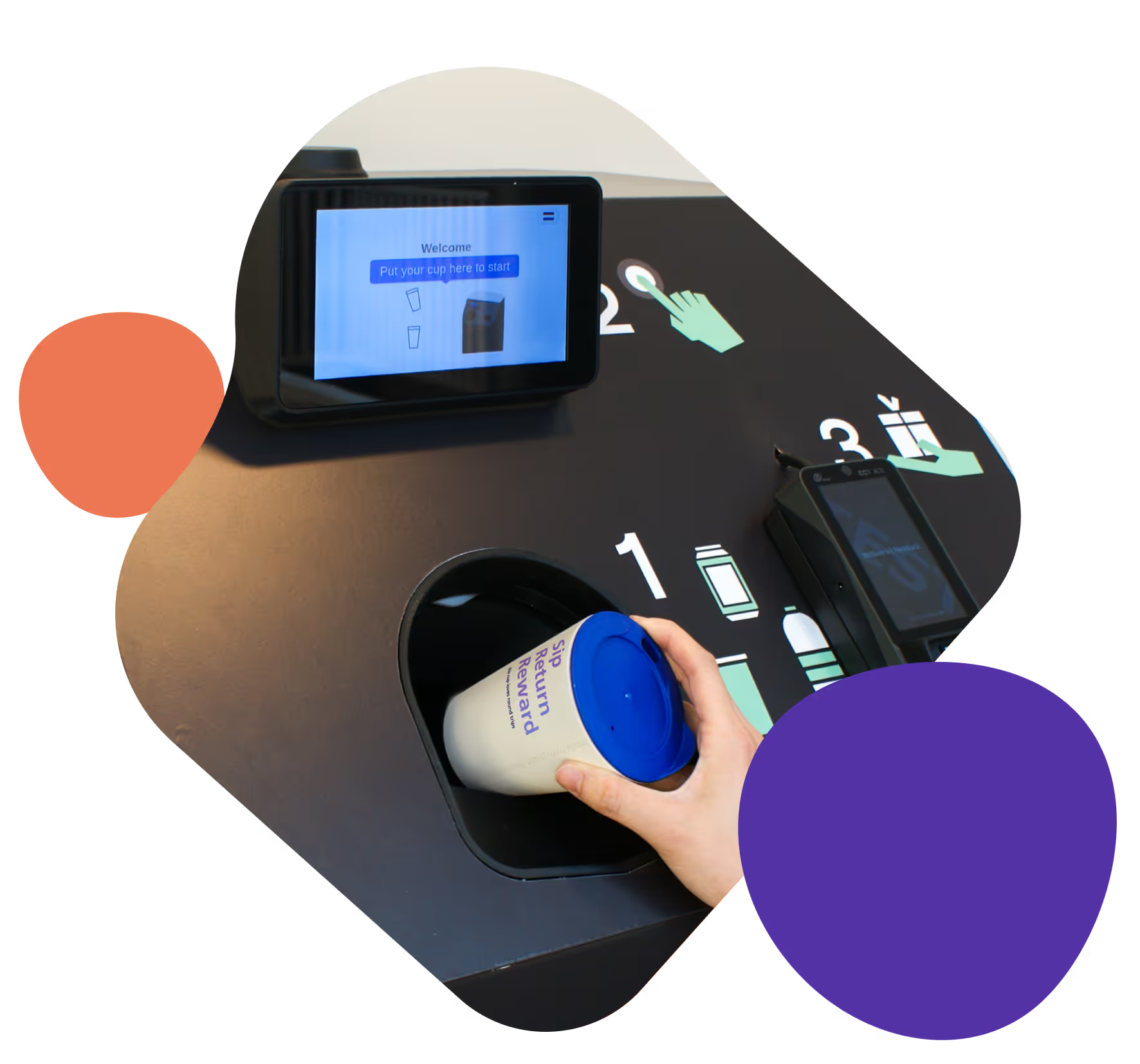
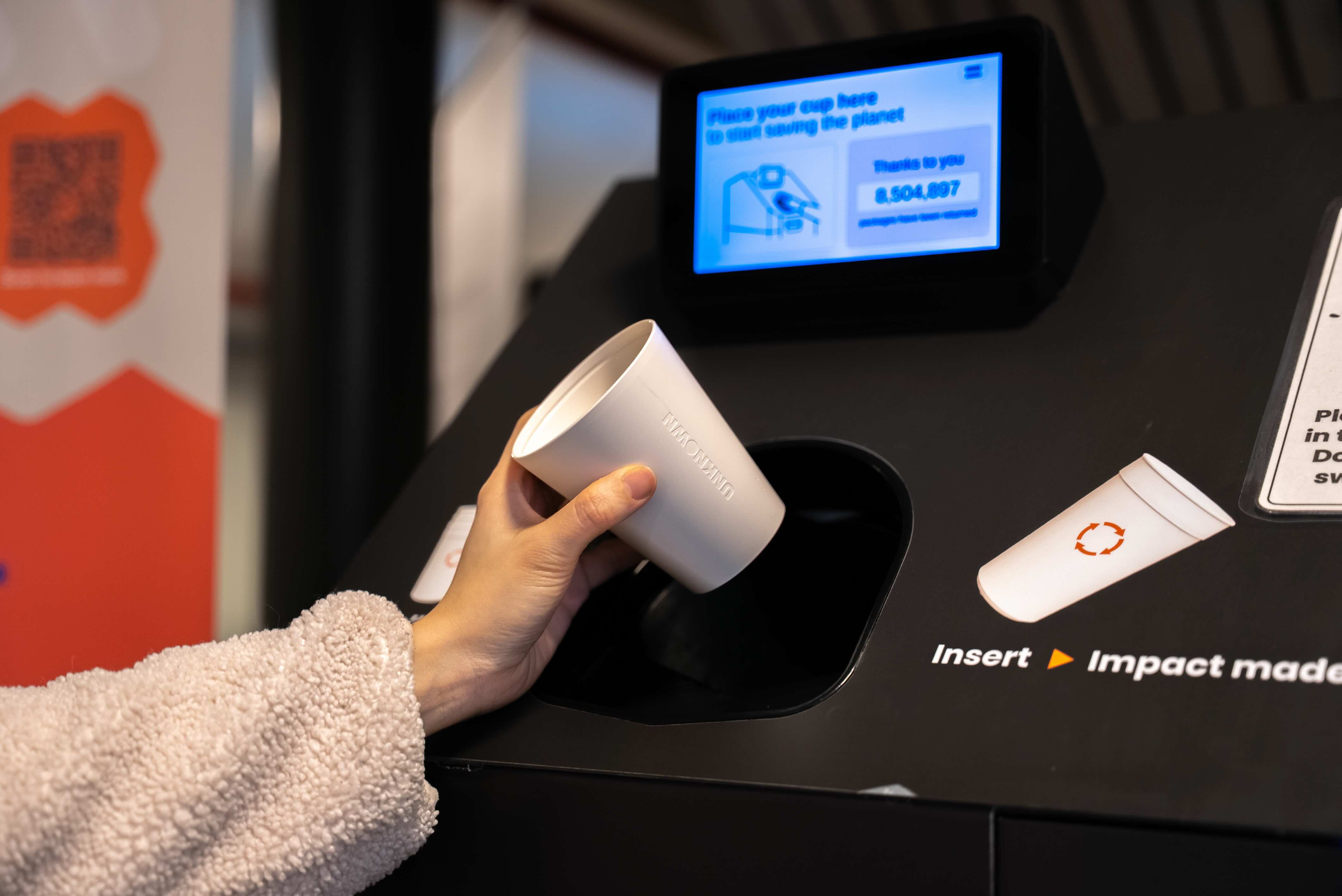
PackBack transforms this challenge into measurable progress without disrupting workflows or guest experience.
At Amsterdam Airport Schiphol, PackBack was deployed as part of a pilot to introduce a reusable cup system within a live, high-footfall international environment.
The pilot demonstrated that reuse can function effectively in a complex, multi-operator ecosystem, achieving 87-90% return rates while maintaining a 4.54 out of 5 guest satisfaction score.
Schiphol is one of Europe’s busiest airports, hosting a wide range of food and beverage operators within a shared infrastructure environment.
Unlike single-brand environments, airports operate as aggregators: multiple vendors, diverse customer journeys, and a constant flow of international travelers - all within one operational system.
This creates a uniquely complex setting for reusable packaging systems.

Introducing reuse at an airport presents fundamentally different challenges compared to traditional restaurant environments.
Key challenges included:
● International users with no familiarity with local systems or payment methods
● Multiple independent operators sharing the same infrastructure
● High and unpredictable peaks in passenger flow
● Limited ability to guide or educate users
● Strict requirements on hygiene, safety, and operational reliability
In this context, reuse systems must work intuitively, without relying on staff intervention or customer explanation.
The Schiphol pilot was delivered in collaboration with multiple partners:
● PackBack - smart return infrastructure and system logic
● Cupstack - logistics and washing
● Circulware - reusable cup production
Together, the system enabled a fully circular beverage packaging flow within the airport.

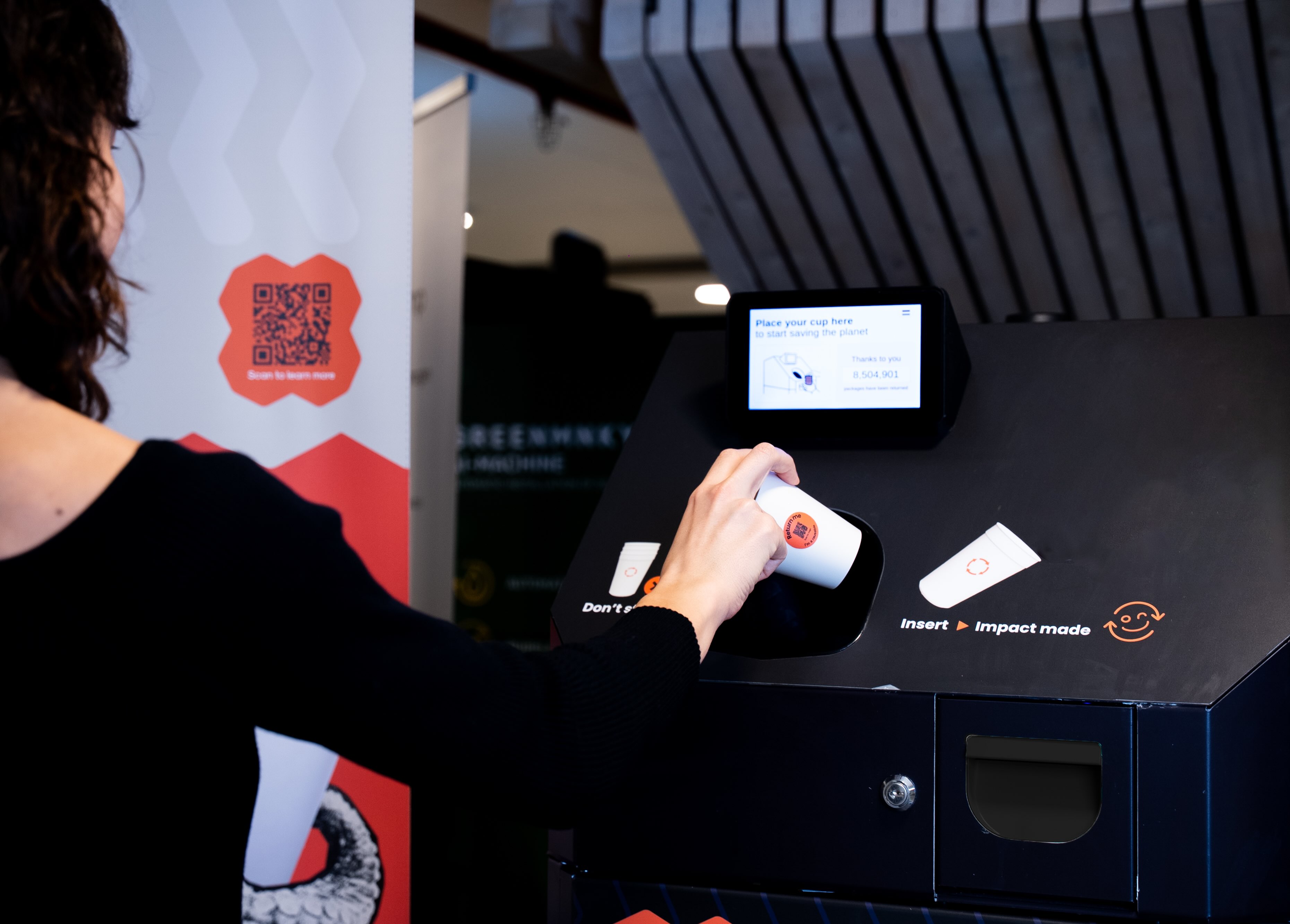
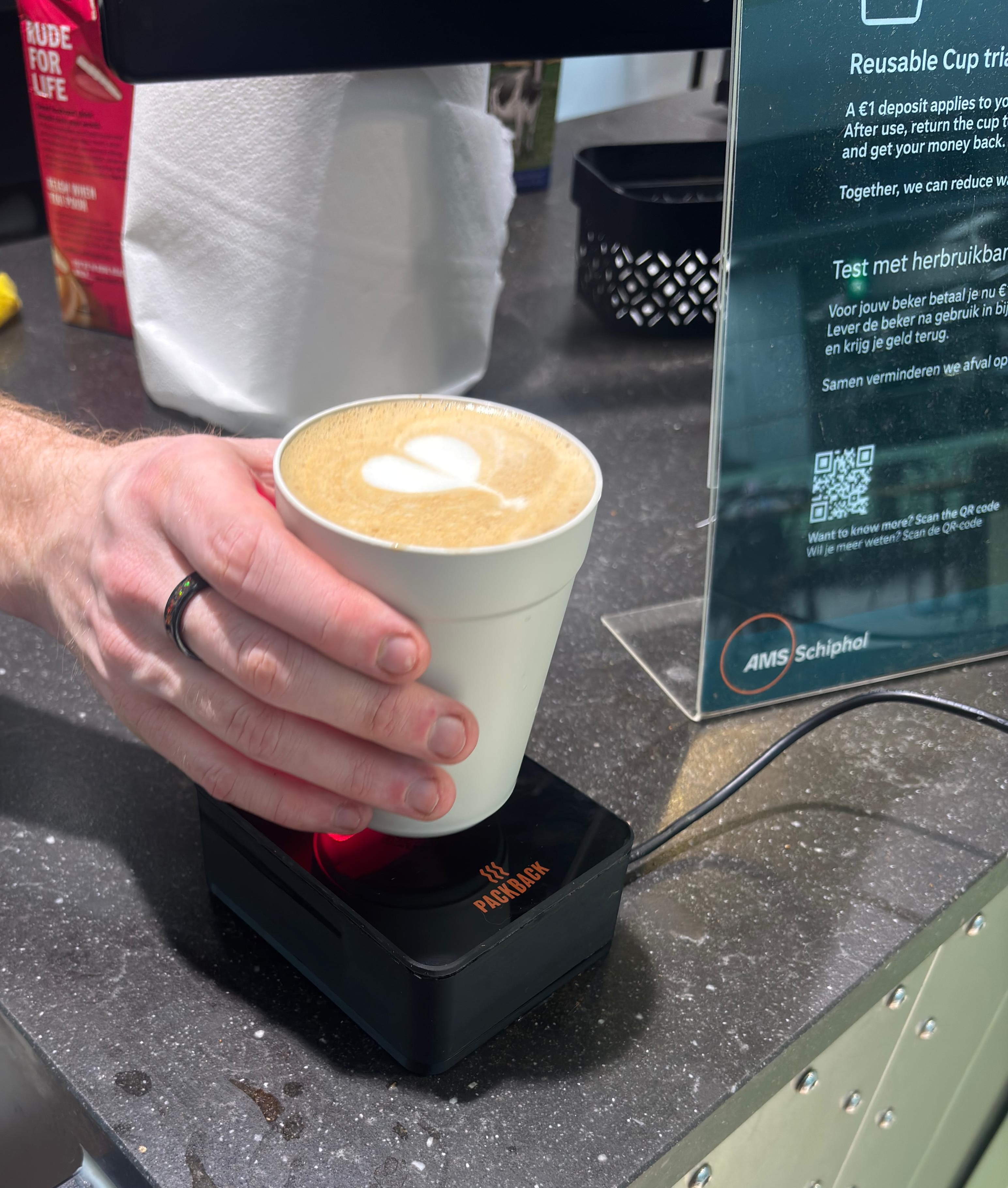
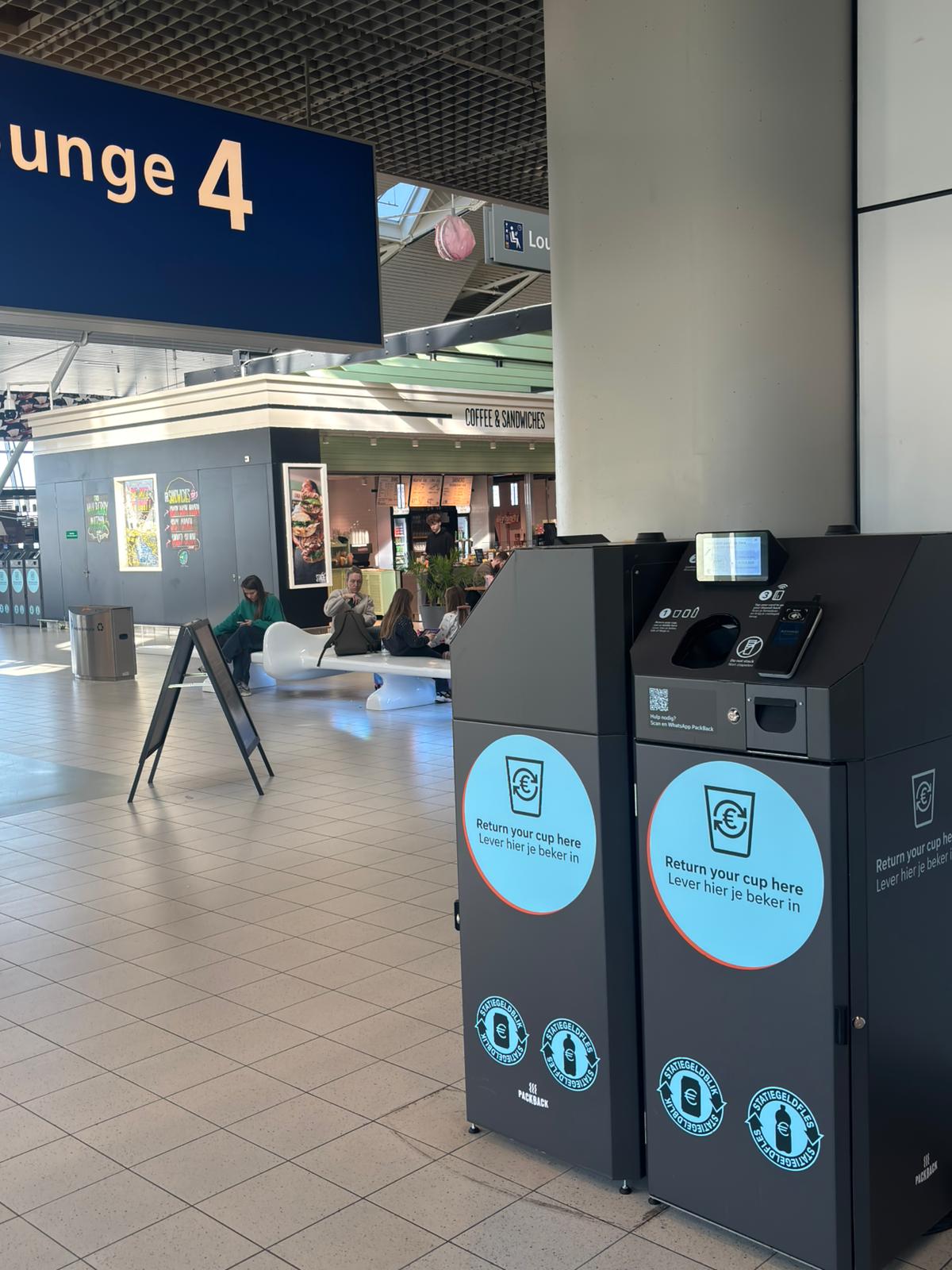
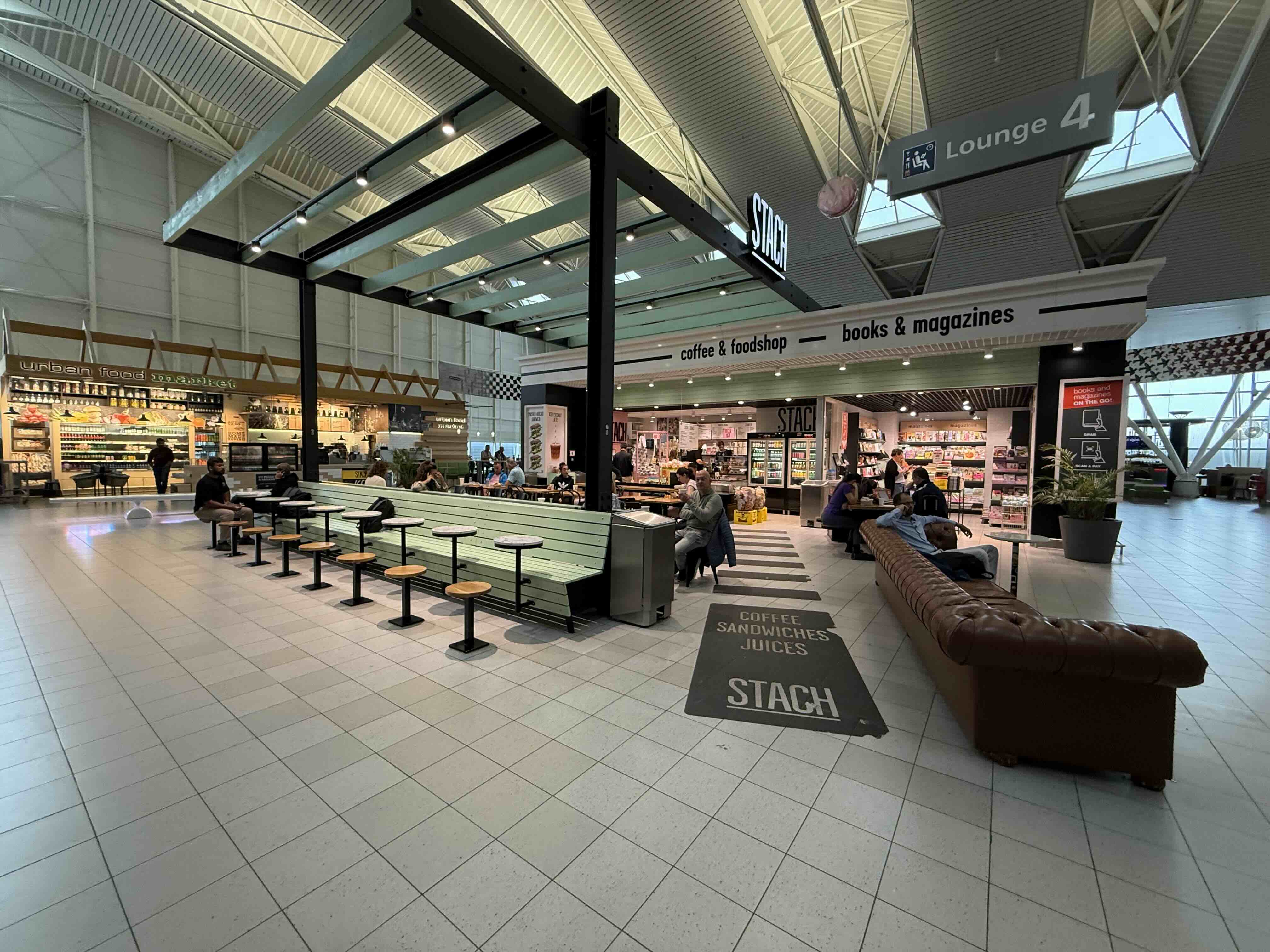
The pilot was conducted in Schiphol Lounge 4, a high-traffic area with continuous passenger flow. Results demonstrate that:
● Return rates reached 87–90% in the first month, exceeding expectations for a live airport environment
● Guest satisfaction remained strong, with an average score of 4.54 out of 5
● Guests adopt the system quickly, even without prior exposure
● The system operates reliably under peak conditions
● Staff acceptance improves as the system integrates into daily operations
These outcomes validate that reuse can operate effectively in environments with minimal control over user behaviour.

Airports are complex, high-volume environments where every operational detail matters. This is where you see how the PackBack reuse system performs in practice — from adoption to operational impact. Return rates exceeded our expectations, and the waste reduction spoke for itself. It’s great to work with partners who turn ambition into systems that work on the ground.
In an airport environment, packaging systems must serve multiple stakeholders simultaneously: operators, landlords, and travelers.
PackBack enables this by functioning as a shared infrastructure layer. By combining reusable cups with an integrated collection of bottles and cans, the system simplifies user behavior, creates cleaner public spaces, and supports broader carbon-neutral and circularity goals at airport level.
Airports are unforgiving systems. Passenger volumes are extreme, staff time is scarce, and processes must remain seamless. Sustainability only works here if it is operationally invisible and financially sound.
The pilot shows that reuse can scale beyond a single brand to an entire ecosystem, directly contributing to Schiphol’s goal of 70% recycling by 2030 and full circularity by 2050.
Single-use cups
.jpeg)

Reusable packaging in airport environments is often considered highly complex due to the diversity of users, operators, and operational constraints.
At Schiphol, the PackBack system demonstrates that reuse can function reliably even in one of the most demanding real-world environments, combining high return rates with strong user satisfaction.
The pilot provides a strong foundation for scaling reuse across broader airport operations.
PackBack enables shared systems that work across vendors, locations, and user types without adding operational friction.